
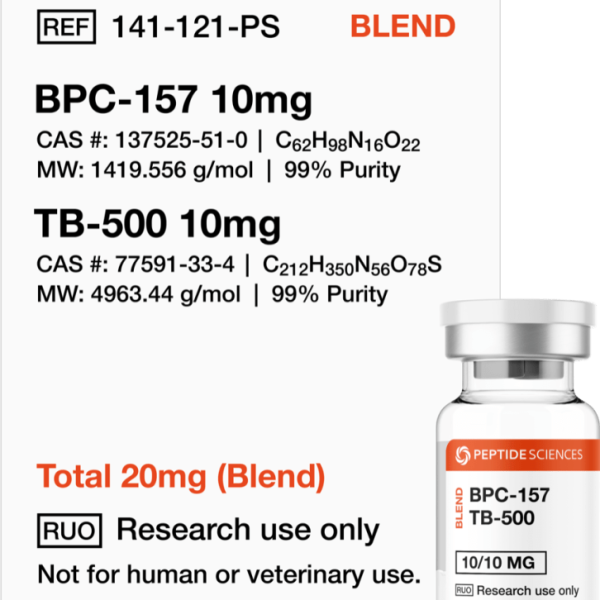
BPC-157, TB-500 10mg (Blend)
$120.00
PRODUCT SHORT DESCRIPTION
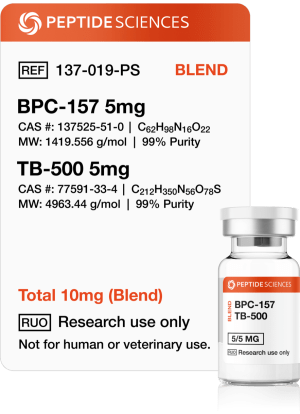
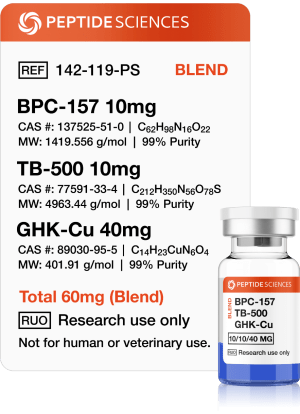
The BPC-157 and TB-500 formulation delivers an advanced, dual-action 10mg (10,000mcg) research blend combining two synergistic synthetic peptides in a single 5mg/5mg configuration. This ratio is engineered strictly for investigating parallel extracellular matrix remodeling, accelerated angiogenesis, and musculoskeletal tissue repair kinetics.
Introduction to the Dual-Action Regenerative Matrix
The BPC-157, TB-500 10mg Blend represents a highly sophisticated, parallel-pathway research platform designed to evaluate complex compound synergy across mammalian tissue repair, wound healing, and musculoskeletal recovery models. Rather than targeting an isolated cellular mechanism, this advanced 10,000mcg blend unifies two distinct synthetic peptide architectures: a stable gastric pentadecapeptide and a functional thymosin beta-4 fragment. At USA PEPTIDE SCIENCES, we supply this dual-action matrix in a precisely calibrated, vacuum-sealed lyophilized form, providing orthopedic, pathology, and molecular biology laboratories with a reliable vehicle to map synchronized cellular migration, endothelial proliferation, and structural tissue rebuilding cycles without the risks of cross-contamination from manual multi-vial mixing.
Research Overview: Multi-Pathway Tissue Repair and Synergy
The primary scientific value of the 10mg combination blend centers on the physiological concept of cascading signaling network amplification. In native biological models, structural injuries to tendons, ligaments, and muscle tissue engage multiple, overlapping cellular networks. This blend allows researchers to track steady-state data across distinct healing pathways simultaneously.
Key areas of active scientific investigation utilizing this dual-action research blend include:
-
Accelerated Angiogenesis and Endothelial Migration: Modeling the structural formation of new microvascular networks. The blend unifies the angiogenic signaling of BPC-157 and TB-500 to study the upregulation of vascular endothelial growth factor (VEGF) and the subsequent recruitment of endothelial cells. This combination is highly scrutinized for its capacity to accelerate the proliferation of capillaries into ischemic or avascular tissue zones.
-
Actin Polymerization and Cytoskeletal Dynamics: Evaluating cellular locomotion mechanics during injury resolution. By introducing the direct cellular transport optimization properties of the GHR peptide variant TB-500, researchers are able to track how the regulation of globular actin (G-actin) into filamentous actin (F-actin) accelerates cellular motility, allowing defensive and structural cells to rapidly populate a wound matrix.
-
Extracellular Matrix (ECM) Remodeling and Collagen Alignment: Investigating the deposition, maturation, and tensile alignment of structural tissue matrices. Researchers analyze the downstream impact of both compounds on modulating matrix metalloproteinases (MMPs) and upregulating growth factors. Studies focus on optimizing regular, parallel collagen filament cross-linking while actively discouraging the disorganized fibrotic accumulation typical of scarring.
-
Inflammatory Cascade Attenuation: Analyzing the combined suppression of localized stress pathways. Investigators utilize this specific formulation to measure downregulations in pro-inflammatory cytokines and trace the inhibition of chronic oxidative stress markers, evaluating the blend’s role in establishing a homeostatic microenvironment favorable to tissue regeneration.
Compound Profiles and Functional Architecture
To support rigorous, repeatable analytical trials, the 10mg blend is manufactured to an exact 1:1 quantitative ratio featuring two highly verified research sequences:
-
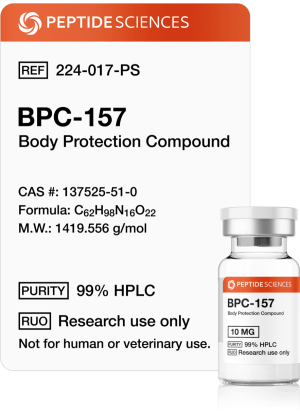
BPC-157: A synthetic sequence representing the fully functional fragment of human gastric juice protein, optimized for extreme chemical stability in liquid environments and recognized for its extensive cytoprotective properties across soft tissue models.
-
TB-500: A synthetic fragment of the endogenous protein thymosin beta-4 ($\text{Ac-Ser-Asp-Lys-Pro-Leu-Met-Gly-Met-Glu-Lys-Gln-Val-Glu-Lys-Ser-Asn-Gly-Ile}$) engineered to optimize cell-autonomous migration and wound healing dynamics via G-actin binding.
Quality Standards & Analytical Testing
At USA PEPTIDE SCIENCES, laboratory data integrity and compound reproducibility are the fundamental core of our manufacturing operations. Every single production lot of the BPC-157, TB-500 10mg Blend undergoes a severe quality control validation protocol to eliminate compounding variables and experimental artifacts. We utilize High-Performance Liquid Chromatography (HPLC) coupled with Mass Spectrometry (MS) to confirm an absolute chemical purity profile of 99% or greater across both active chemical compounds within the matrix. This rigorous analytical validation verifies the precise amino acid sequence layouts, exact molecular weights, and correct spatial conformations while ensuring the total absence of residual synthesis reagents, truncated fragments, heavy metals, or raw contaminants. A batch-specific Certificate of Analysis (COA) accompanies every order to guarantee absolute reproducibility.
Storage and Handling Requirements
To safeguard the complex structural integrity and prevent premature thermal or mechanical breakdown of the 10mg lyophilized cake, all vials must be stored long-term in a freezer environment at -20°C, completely shielded from light and ambient moisture. Prior to introducing the compound into your laboratory workflow, reconstitution must be carried out using an appropriate sterile, non-pyrogenic, or bacteriostatic diluent. Once transitioned into a liquid solution, the peptide blend exhibits heightened sensitivity to physical shear stress and thermal degradation; reconstituted vials must be maintained under constant refrigeration at 2°C to 8°C. Researchers must dissolve the compound via a slow, gentle swirling motion, avoiding any aggressive mechanical agitation, inversion, or shaking.
Research Use Disclaimer
The compounds distributed by USA PEPTIDE SCIENCES, including the BPC-157, TB-500 10mg research vials, are designated strictly for laboratory research purposes only. Under no circumstances are these products approved or intended for human or veterinary consumption, direct clinical diagnostics, or therapeutic drug administration. All handling, measuring, and experimental evaluation must be conducted exclusively by qualified scientific professionals within a certified and monitored research facility.

Reviews
Clear filtersThere are no reviews yet.