
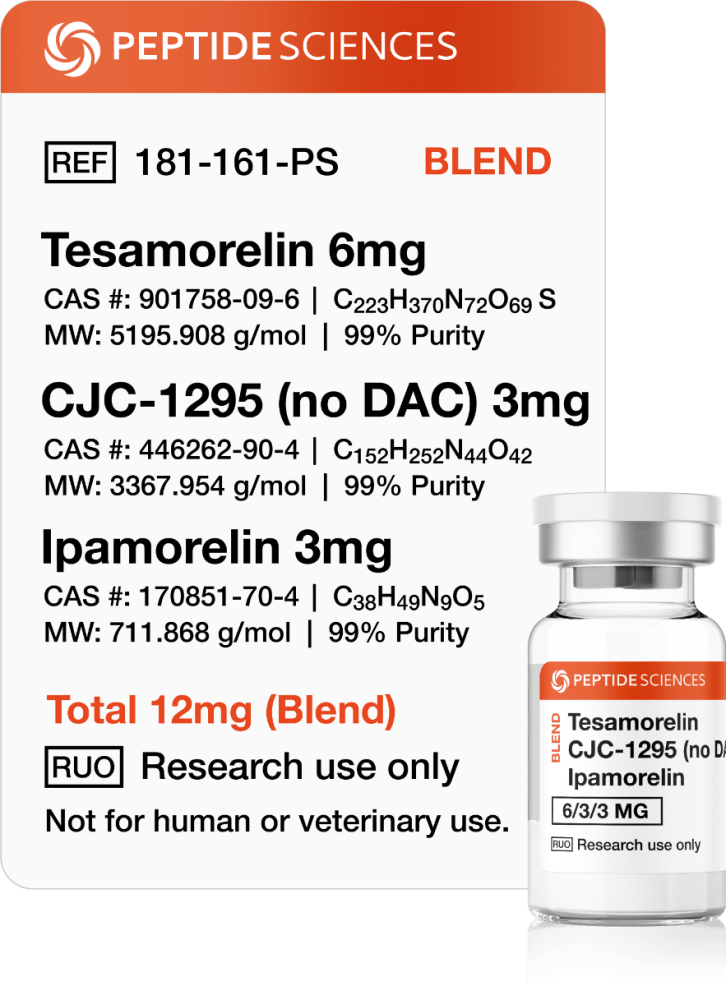
Tesamorelin, CJC-1295 (No DAC), Ipamorelin 12mg (Blend)
$125.00
PRODUCT SHORT DESCRIPTION
Tesamorelin, CJC-1295 (No DAC), Ipamorelin 12mg Blend from USA PEPTIDE SCIENCES is a sophisticated triple-peptide research formulation combining two complementary GHRH analogs with a highly selective ghrelin receptor agonist for comprehensive, multi-pathway somatotropic axis investigation. This advanced blend enables investigators to study the convergent and additive effects of dual GHRH receptor engagement alongside GHS-R1a activation — modeling amplified GH pulsatility, downstream IGF-1 dynamics, and associated metabolic parameters within a single analytically verified research platform. Every batch is HPLC-MS verified to ≥99% purity and accompanied by a full Certificate of Analysis.
Tesamorelin, CJC-1295 (No DAC), Ipamorelin 12mg Blend — Advanced Triple-Peptide Somatotropic Research Compound
Introduction: The Next Level of GH Axis Research Complexity
The Tesamorelin, CJC-1295 (No DAC), Ipamorelin 12mg Blend from USA PEPTIDE SCIENCES represents the most compositionally advanced somatotropic research formulation in our growth hormone secretagogue catalog. By integrating three independently characterized peptide compounds — two structurally distinct GHRH receptor agonists and a benchmark-selective ghrelin receptor agonist — into a single precision-formulated research blend, this 12mg unit provides investigators with an unparalleled platform for studying the full complexity of GH secretory regulation at the anterior pituitary level.
The scientific rationale underpinning this triple-peptide architecture is grounded in the well-established biology of somatotroph stimulation. GHRH receptor activation and GHS-R1a activation engage distinct intracellular signaling cascades — cAMP/PKA and IP3/calcium mobilization pathways respectively — that converge at the level of GH vesicle exocytosis to produce a synergistically amplified secretory response. The addition of a second structurally differentiated GHRH analog within the blend introduces an additional dimension of receptor engagement kinetics and stability profiling, creating a multi-parameter research model of exceptional scientific depth. The 12mg high-yield format ensures that investigators conducting extended, multi-arm, or multi-replicate studies have the compound volume necessary to execute research designs of the highest analytical rigor.
Research Overview: Individual Component Profiles and Integrated Research Applications
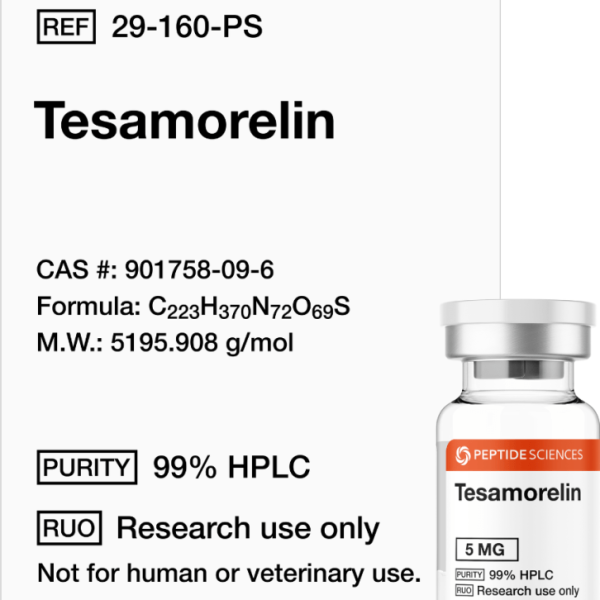
Tesamorelin: Clinically Characterized GHRH Analog Tesamorelin is a synthetic GHRH(1-44) analog distinguished by its trans-3-hexenoic acid N-terminal modification — a structural feature that confers DPP-IV enzymatic resistance while preserving full GHRH receptor binding affinity and biological activity. Its clinical research legacy in HIV-associated lipodystrophy provides an unusually deep translational evidence base for a research peptide, with documented effects on visceral adipose reduction, IGF-1 axis activation, lipid metabolism normalization, and cardiovascular risk parameter modulation across multiple controlled clinical investigations. Within this triple-peptide blend, Tesamorelin contributes a clinically validated GHRH receptor activation profile and a well-characterized metabolic downstream research footprint.
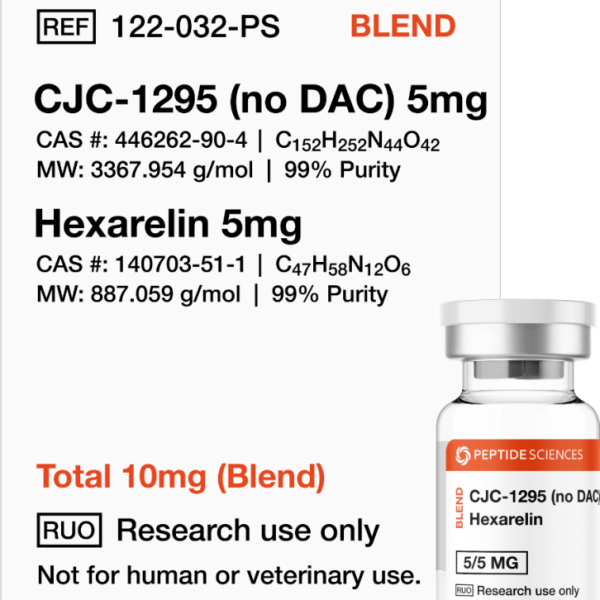
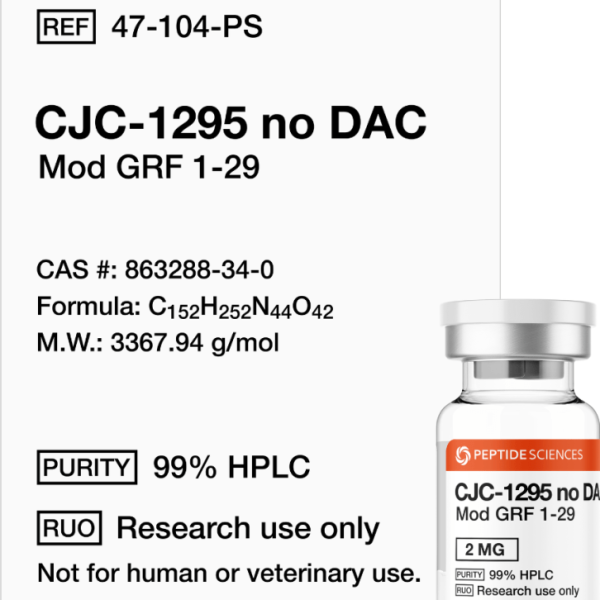
CJC-1295 (No DAC): Stabilized Short-Acting GHRH Analog CJC-1295 without DAC — also referenced in the literature as Modified GRF(1-29) or Mod GRF — is a tetra-substituted truncated GHRH analog featuring protective amino acid substitutions at positions 2, 8, 15, and 27 of the native GHRH(1-29) sequence. These substitutions confer DPP-IV resistance and enhanced GHRH receptor binding affinity while preserving a pulsatile, short-acting pharmacokinetic profile — in deliberate contrast to the DAC-conjugated variant designed for prolonged receptor occupancy. CJC-1295 (No DAC) is among the most widely utilized GHRH analogs in preclinical GH research, valued for its capacity to model discrete, physiologically patterned GH secretory pulses within controlled experimental timeframes.
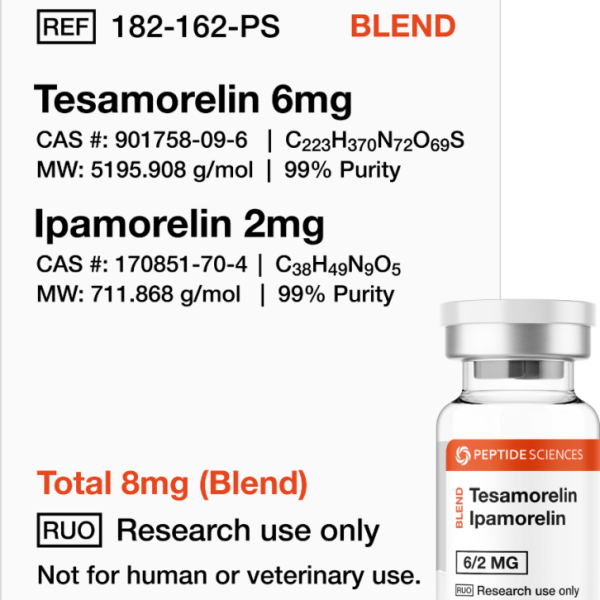
Within this blend, CJC-1295 (No DAC) and Tesamorelin together constitute a dual GHRH receptor stimulation platform — two structurally differentiated analogs engaging the same receptor class through overlapping but not identical binding kinetics, providing investigators with a richer model of GHRH receptor pharmacodynamics than either compound delivers independently.
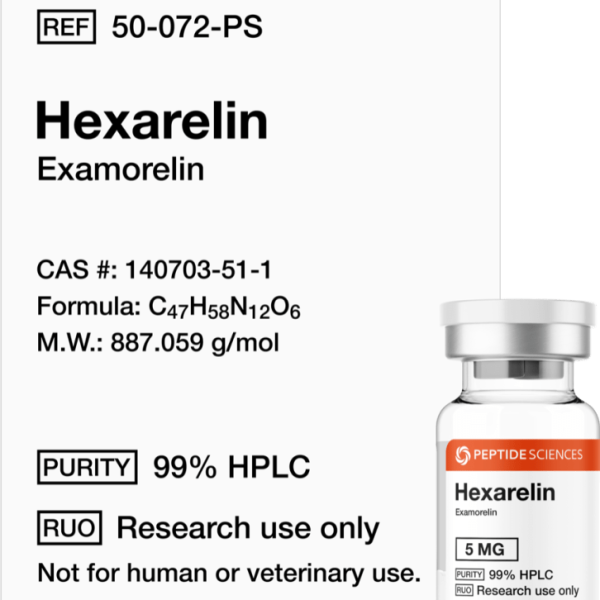
Ipamorelin: Benchmark-Selective GHS-R1a Agonist Ipamorelin is a synthetic pentapeptide ghrelin receptor agonist and the established selectivity benchmark within the GHRP compound class. Its pharmacological signature — potent GHS-R1a-mediated GH release with negligible off-target stimulation of cortisol, prolactin, or ACTH at research-relevant concentrations — makes it the ghrelin receptor agonist of choice for investigators requiring isolated GHS-pathway activation without confounding neuroendocrine variables. Ipamorelin’s well-characterized effects on GH pulsatility, IGF-1 dynamics, lean mass modeling, bone mineral density research, and sleep-associated GH secretion have established it as a cornerstone compound in GHS-R1a pharmacology research.
Within this triple-peptide blend, Ipamorelin provides the GHS-R1a signaling arm that, combined with the dual GHRH receptor stimulation of Tesamorelin and CJC-1295 (No DAC), creates the most comprehensively activated somatotropic secretory model available in a single research formulation.
Integrated Triple-Pathway Research Applications
Amplified GH Pulsatility and Somatotroph Secretory Dynamics The convergent activation of cAMP/PKA signaling through dual GHRH receptor engagement and IP3/calcium mobilization through GHS-R1a stimulation produces a maximally amplified somatotroph GH secretory response — the central research utility of this triple-peptide architecture. Investigators studying GH secretory dynamics, somatotroph cellular biology, or pituitary secretagogue pharmacology will find this blend uniquely suited to modeling the upper range of physiologically achievable GH pulse amplitudes within controlled experimental designs.
Visceral Adipose Metabolism and Lipolytic Pathway Research The combined GH secretory stimulus generated by this blend makes it a powerful platform for visceral adipose tissue research. Building on Tesamorelin’s established clinical evidence base in fat metabolism and CJC-1295’s documented effects on lipolytic parameters, this triple-peptide formulation enables investigators to study GH-driven hormone-sensitive lipase activation, adipokine regulation, and visceral fat depot dynamics across a spectrum of metabolic research models — including diet-induced obesity, aging-associated adiposity, and GH-deficiency paradigms.
IGF-1 Axis Activation and Anabolic Pathway Research The amplified GH secretory response generated by the triple-peptide combination translates downstream into robust IGF-1 axis activation — making this blend a valuable tool for studies of hepatic IGF-1 synthesis, IGF binding protein regulation, and the downstream PI3K/Akt/mTOR anabolic signaling network. Investigators focused on muscle biology, lean mass modeling, protein synthesis dynamics, or GH/IGF-1 axis pharmacology will find the 12mg format particularly well-suited for multi-timepoint, multi-tissue research designs.
Bone Mineral Density and Skeletal Remodeling Research GH and IGF-1 are well-established regulators of bone metabolism, and the triple-peptide blend’s capacity to robustly activate this axis makes it a compelling research tool for skeletal biology investigations. Preclinical studies have examined GHRH analog and GHRP combination effects on osteoblast activity, bone mineral density parameters, and cortical bone remodeling indices — research areas of direct relevance to osteoporosis biology, skeletal aging modeling, and anabolic bone pharmacology research programs.
Comparative GHRH Analog Pharmacodynamics Research The simultaneous presence of two structurally differentiated GHRH analogs within this blend — Tesamorelin and CJC-1295 (No DAC) — creates a unique opportunity for investigators interested in comparative GHRH receptor pharmacodynamics. Studies examining receptor binding competition, occupancy kinetics, and downstream signaling interactions between structurally distinct GHRH analogs represent a specialized but scientifically valuable research application uniquely enabled by this triple-peptide formulation.
Metabolic Syndrome and Body Composition Modeling The convergent metabolic effects of this triple-peptide blend — spanning GH-driven lipolysis, IGF-1-mediated anabolism, and the well-documented influence of the GH/IGF-1 axis on insulin sensitivity and glucose metabolism — position it as a broadly applicable research tool for metabolic syndrome modeling, body composition research, and GH-related endocrine dysfunction studies.
Quality Assurance & Analytical Testing
The triple-peptide composition of the Tesamorelin, CJC-1295 (No DAC), Ipamorelin 12mg Blend demands the most rigorous analytical verification protocol in our growth hormone secretagogue product range. At USA PEPTIDE SCIENCES, every blend batch is subjected to comprehensive multi-component quality assessment:
- HPLC (High-Performance Liquid Chromatography): Independent chromatographic verification of all three active peptide components — Tesamorelin, CJC-1295 (No DAC), and Ipamorelin — confirming individual purity profiles, blend ratio accuracy, and the complete absence of synthesis impurities or degradation byproducts across all three peptide fractions
- Mass Spectrometry (MS): Sequential molecular mass verification of each peptide sequence within the finished blend matrix — confirming the structural identity of the GHRH(1-44) analog, the tetra-substituted GHRH(1-29) analog, and the GHS-R1a pentapeptide agonist independently
- Blend Ratio Verification: Analytical confirmation that the relative proportions of all three peptide components within the 12mg blend unit meet specified research-grade formulation standards, ensuring experimental consistency across every vial
- Endotoxin and Sterility Screening: Applied to all production batches to meet the contamination control standards required in professional preclinical research environments
Every 12mg blend unit is released at confirmed ≥99% purity, with a fully traceable Certificate of Analysis (COA) available through the USA PEPTIDE SCIENCES documentation platform. Complete analytical traceability across all three peptide components supports institutional compliance, grant documentation requirements, and publication-ready experimental reproducibility standards.
Lyophilization is performed under controlled pharmaceutical-grade conditions, preserving the structural integrity and stability of all three active peptide components through packaging, transit, and laboratory reconstitution.
Storage & Handling Recommendations for Laboratory Use
The triple-peptide composition of this blend requires disciplined storage and handling practices to maintain the integrity of all three active components across the full duration of a research program.
Recommended storage conditions:
- Long-term archival storage: −20°C in a sealed, desiccated, light-protected environment; stable for up to 24 months under optimal conditions
- Active working storage: 2–8°C, protected from light and humidity, for short-term use following initial compound access
- Post-reconstitution: Reconstitute using sterile bacteriostatic water or an appropriate research-grade aqueous solvent at the concentration required by your experimental protocol; store reconstituted solution at 2–8°C and use within a timeframe consistent with current multi-peptide blend stability recommendations
- Pre-aliquot into single-use portions prior to archival storage to eliminate repeated freeze-thaw cycling and preserve the structural integrity of all three peptide components across extended, multi-phase study timelines
- Handle under sterile laboratory conditions using appropriate PPE and in full compliance with institutional biosafety and compound handling regulations
Research Use Disclaimer
The Tesamorelin, CJC-1295 (No DAC), Ipamorelin 12mg Blend supplied by USA PEPTIDE SCIENCES is intended exclusively for in vitro research and preclinical laboratory investigation. This compound has not been approved by the U.S. Food and Drug Administration or any equivalent international regulatory authority for administration to humans or animals outside of formally authorized research contexts.
This product is not a pharmaceutical, dietary supplement, or therapeutic preparation of any kind. It is not intended to diagnose, treat, cure, or prevent any disease or medical condition, and must not be self-administered or applied to human subjects outside of a properly licensed, ethically approved, and institutionally supervised research environment.
By completing a purchase, the acquiring party confirms they are a qualified scientific professional procuring this compound solely for lawful research purposes in full compliance with all applicable federal, state, and local regulations.
USA PEPTIDE SCIENCES is committed to delivering the most analytically rigorous, precisely formulated, and fully documented research compounds available — because the most complex science demands the most uncompromising standards of quality.
Reviews
Clear filtersThere are no reviews yet.