
NAD+ Supplement 500mg/1000mg
Price range: $54.99 through $89.99
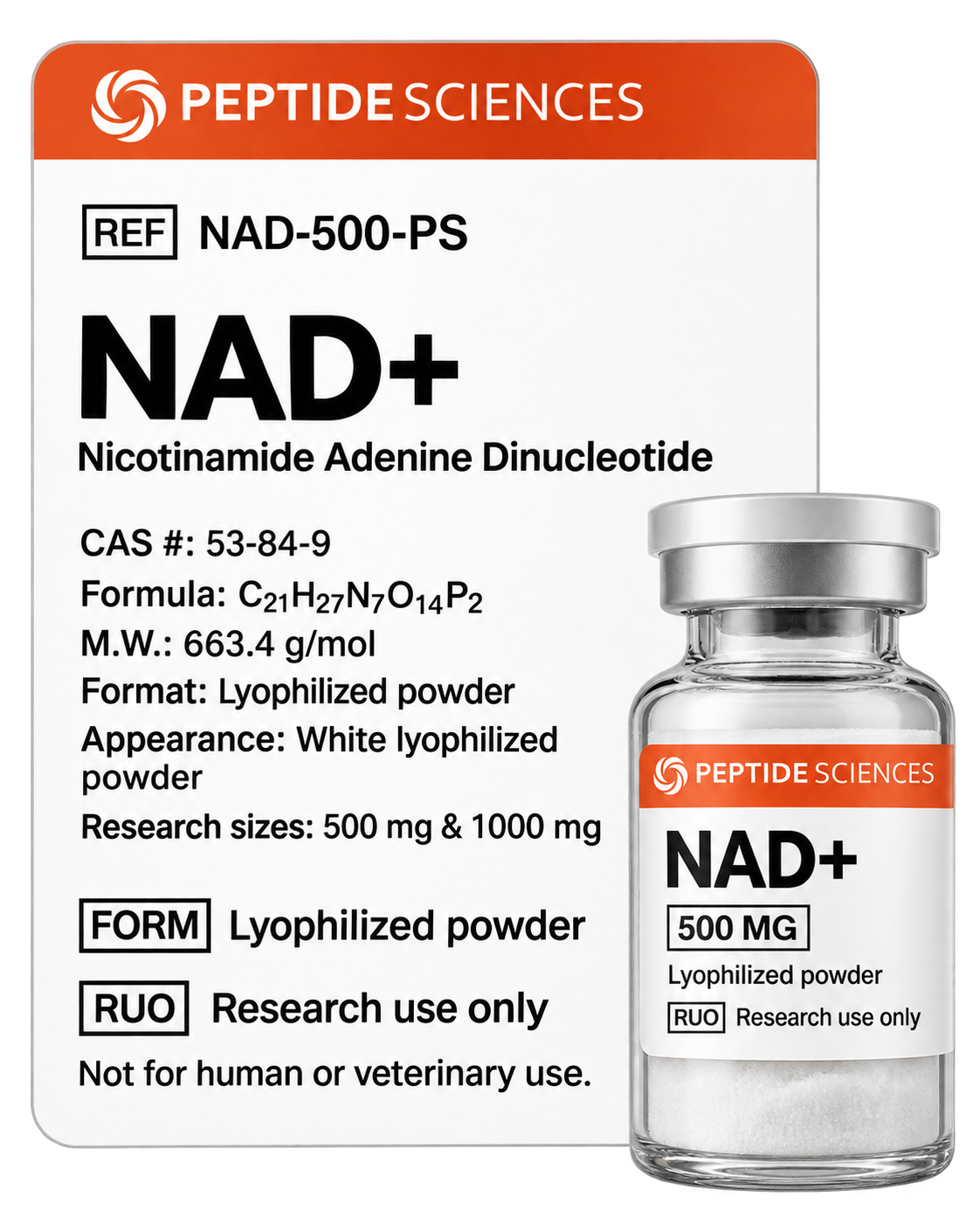
- NAD+ laboratory research compound
- Nicotinamide adenine dinucleotide, oxidized form
- Not a peptide
- Available research sizes: 500mg and 1000mg
- Molecular formula: C21H27N7O14P2
- Molecular weight: approximately 663.4 g/mol
- CAS number: 53-84-9
- Research focus: redox metabolism, mitochondrial bioenergetics, sirtuins, PARPs and NAD-consuming enzymes
- Format: White lyophilized powder
- Research applications include NAD+/NADH redox studies and NAD metabolism
- Strictly for laboratory and in-vitro research only
NAD+ 500mg & 1000mg – Nicotinamide Adenine Dinucleotide Research Compound
What Is NAD+?
NAD+, or nicotinamide adenine dinucleotide, is an essential cellular coenzyme involved in both redox metabolism and cell-signaling pathways.
The “+” designates the oxidized form of the molecule.
NAD+ can accept electrons during metabolic reactions and become NADH. NADH can subsequently donate reducing equivalents within other biochemical pathways and return to its oxidized state.
This reversible relationship makes the NAD+ / NADH redox pair central to cellular metabolism.
Unlike many products offered by Peptide Science, NAD+ is not a peptide. It is a dinucleotide cofactor composed of nicotinamide and adenine nucleotide components joined through phosphate groups.
Laboratories investigate it across metabolic, mitochondrial, enzymatic and cellular-signaling research.
NAD+ Molecular and Technical Data
| Property | Specification |
|---|---|
| Compound | Nicotinamide Adenine Dinucleotide |
| Common abbreviation | NAD+ |
| Alternative term | NAD plus |
| Chemical class | Dinucleotide coenzyme |
| Peptide | No |
| Molecular formula | C21H27N7O14P2 |
| Molecular weight | Approximately 663.4 g/mol |
| CAS number | 53-84-9 |
| Oxidation state | Oxidized NAD |
| Research sizes | 500mg and 1000mg |
| Format | Lyophilized powder |
| Appearance | White lyophilized powder |
| Intended use | Laboratory research only |
Exact purity, assay values, lot information and testing results should be taken from the current Peptide Science batch Certificate of Analysis rather than copied from a certificate belonging to another supplier or geographic market.
NAD+ Research Applications
The scientific importance of NAD+ extends considerably beyond its role as a conventional redox cofactor.
Researchers study it in pathways involving:
- Glycolysis
- Citric-acid-cycle metabolism
- Oxidative phosphorylation
- Mitochondrial respiration
- Sirtuin activity
- PARP activity
- DNA-damage responses
- Cellular stress signaling
- NAD-consuming enzymes
- Energy homeostasis
- Metabolic adaptation
These pathways make NAD+ useful in cellular and biochemical research involving metabolism, mitochondrial function and intracellular signaling.
Researchers can review NAD+ metabolism research indexed on PubMed for broader peer-reviewed literature.
NAD+ and Cellular Redox Metabolism
One of the primary roles of NAD+ is as an electron-accepting cofactor.
During metabolic reactions, NAD+ can accept a hydride equivalent and become:
NADH
This NAD+/NADH pair participates in major energy-producing pathways.
Experimental endpoints may include:
- NAD+/NADH ratio
- Cellular redox state
- Glycolytic activity
- Mitochondrial respiration
- Electron-transfer reactions
- ATP-associated metabolism
The balance between oxidized NAD+ and reduced NADH can therefore provide useful information about cellular metabolic state.
NAD+ and Mitochondrial Function
Mitochondria require NAD-associated redox chemistry for normal respiration and energy transduction.
Research has also identified SLC25A51 as a mammalian mitochondrial transporter capable of importing intact NAD+ into mitochondria.
This discovery clarified an important question regarding how mitochondrial NAD pools are maintained.
Laboratories may investigate NAD+ in relation to:
- Mitochondrial NAD pools
- Oxidative phosphorylation
- Electron transport
- Respiratory capacity
- Metabolic stress
- Cellular energy transduction
Mitochondrial and cytosolic NAD pools are related but compartmentalized, which is important when interpreting experimental results.
NAD+ and Sirtuin Research
Sirtuins are NAD-dependent enzymes involved in numerous cellular regulatory processes.
Because sirtuins consume NAD+ during their enzymatic reactions, cellular NAD availability can influence sirtuin-associated signaling.
Relevant research areas include:
- SIRT1-associated signaling
- SIRT3-associated mitochondrial pathways
- Protein deacetylation
- Metabolic regulation
- Cellular stress responses
- Mitochondrial adaptation
It is more accurate to state that NAD+ serves as an essential substrate for sirtuins than to say that adding NAD+ automatically “activates” every sirtuin pathway under all experimental conditions.
NAD+ and PARP Research
Poly(ADP-ribose) polymerases, or PARPs, are another major family of NAD-consuming enzymes.
PARPs participate in processes including:
- DNA-damage responses
- Poly-ADP-ribosylation
- Chromatin-associated signaling
- Cellular stress pathways
Quantitative isotope-tracing research has shown that PARPs and sirtuins constitute substantial routes of NAD consumption in mammalian cells.
The relationship between NAD synthesis and consumption is dynamic, making NAD+ useful for studying metabolic flux rather than simply measuring a static cellular concentration.
NAD+ Turnover and Cellular Flux
A 2018 quantitative metabolism study used isotope tracing to examine NAD synthesis and breakdown across several mammalian cell types.
The research found that nicotinamide is an important precursor for NAD production and demonstrated substantial NAD turnover through PARPs and sirtuins.
This work highlights an important concept:
NAD+ is continuously synthesized, consumed and recycled.
Researchers may therefore investigate:
- NAD synthesis rate
- NAD consumption
- Nicotinamide salvage
- PARP-mediated turnover
- Sirtuin-mediated turnover
- Compartment-specific NAD pools
The total amount present at one moment does not fully describe NAD metabolism.
NAD+ and CD38
CD38 is an NAD-consuming ectoenzyme with an important role in NAD metabolism.
Research published in Cell Metabolism found that CD38 expression and activity increased with aging in mouse models and contributed to age-associated NAD decline.
The same study identified CD38 as a major enzyme involved in the degradation of the NAD precursor NMN in vivo.
Researchers may therefore investigate NAD+ in relation to:
- CD38 activity
- NMN metabolism
- Age-associated metabolic changes
- Mitochondrial function
- SIRT3-associated pathways
- NAD degradation
These findings are preclinical and should not be translated directly into human anti-aging claims.
NAD+ vs NADH
NAD+ and NADH are two redox states of the same coenzyme system.
NAD+
The oxidized form.
It accepts reducing equivalents during biochemical reactions.
NADH
The reduced form.
It carries reducing equivalents that can be transferred to other metabolic pathways.
The ratio between NAD+ and NADH is an important laboratory marker of cellular redox state.
Neither term should be used interchangeably with the other.
NAD+ vs NMN vs NR
NAD+, NMN and NR are related but chemically distinct compounds.
NAD+
Nicotinamide adenine dinucleotide is the final coenzyme used directly in numerous redox and signaling reactions.
NMN
Nicotinamide mononucleotide is an intermediate in NAD biosynthesis.
NMN can be converted into NAD+ by NMN adenylyltransferase enzymes.
NR
Nicotinamide riboside is a nucleoside precursor.
NR can be phosphorylated by nicotinamide riboside kinases to produce NMN, which can subsequently be converted into NAD+.
A simplified pathway is:
NR → NMN → NAD+
Nicotinamide can also enter the salvage pathway:
Nicotinamide → NMN → NAD+
These molecules should not be described as chemically identical.
Can Cells Take Up NAD+ Directly?
The question of direct NAD+ uptake is more complex than older descriptions suggested.
Research has demonstrated that mammalian mitochondria can transport intact NAD+ through the transporter SLC25A51.
At the whole-cell level, extracellular NAD biology can also involve degradation and conversion into smaller NAD-related metabolites that enter biosynthetic pathways.
Therefore, cellular uptake should be described according to:
- Cell type
- Membrane compartment
- Transporter expression
- Extracellular metabolism
- Experimental conditions
It is inaccurate to assume that every cell simply absorbs intact extracellular NAD+ through the plasma membrane in the same way.
NAD Supplement Search Intent
The keyword NAD supplement frequently refers to consumer nutritional products designed to influence NAD metabolism.
That is not the product described here.
Peptide Science supplies NAD+ as a laboratory research compound.
This product is not represented as:
- A dietary supplement
- A vitamin product
- An oral NAD supplement
- A longevity supplement
- A wellness product
- A medical therapy
Researchers searching for a NAD supplement should distinguish consumer supplements containing NAD-related precursors from research-grade NAD+ material.
What Is NAD Supplement?
The phrase what is NAD supplement usually refers to commercial dietary products containing ingredients intended to support NAD-related metabolism.
Such products may contain:
- Nicotinamide riboside
- Nicotinamide
- Other vitamin B3 derivatives
- NAD-related ingredients
The Peptide Science product is different.
It consists of NAD+ research material intended for controlled laboratory use.
NAD Injections Search Clarification
Searches for NAD injections are associated with human administration.
Peptide Science does not provide injection protocols, administration instructions or human-use recommendations for NAD+ research material.
The product is not supplied for:
- Human injection
- IV administration
- Intramuscular administration
- Subcutaneous administration
- Veterinary administration
Any vial quantity describes the amount of laboratory material supplied and not a medical dose.
NAD Therapy Near Me Search Clarification
The phrase NAD therapy near me refers to clinical or wellness-service search intent and is not applicable to this research product.
Peptide Science does not represent its laboratory NAD+ material as:
- NAD therapy
- IV therapy
- Anti-aging treatment
- Metabolic treatment
- Wellness therapy
Research-grade material should not be confused with services offered by medical or wellness providers.
NAD+ and Aging Research
Research has documented age-associated changes in NAD metabolism in several experimental systems.
Investigators have studied:
- NAD decline
- CD38 activity
- Sirtuin signaling
- Mitochondrial function
- DNA-damage-associated NAD consumption
- Metabolic adaptation
These findings make NAD metabolism highly relevant to aging biology.
However, evidence that NAD metabolism changes with age does not establish that Peptide Science NAD+ reverses aging or extends human lifespan.
NAD+ and Cellular Energy Research
The term “cellular energy” can oversimplify NAD biology.
NAD+ does not itself function as ATP.
Instead, its redox chemistry enables metabolic pathways that contribute to cellular energy production.
Research may therefore examine:
- NAD+/NADH ratios
- Mitochondrial respiration
- Electron transport
- Oxidative phosphorylation
- ATP production
- Glycolytic flux
This distinction helps keep the biological description accurate.
Quality and Analytical Testing
Each Peptide Science batch should be evaluated using the applicable batch-specific documentation.
Relevant analytical parameters can include:
- Compound identity
- Content assay
- HPLC analysis
- Mass spectrometry
- Batch number
- Certificate of Analysis
The source material supplied for this page included testing data belonging to a separate UK batch.
Those specific batch numbers, test dates and assay values should not be copied onto this USA Peptide Science product page unless they correspond to the actual inventory being sold.
Storage and Handling
The supplied source material recommends storage of lyophilized NAD+ at -20°C, protected from light and moisture.
Following laboratory preparation, the source recommends storage between 2°C and 8°C for short-term handling.
Because stability can depend on:
- Concentration
- pH
- Buffer
- Temperature
- Container
- Light exposure
- Freeze-thaw history
researchers should follow the applicable Peptide Science product label and batch documentation.
These storage details relate strictly to laboratory handling.
Related Cellular and Longevity Research Compounds
Researchers investigating NAD-associated metabolism and cellular-aging pathways may compare the compound with Cartalax 20mg Bioregulator in appropriately designed short-peptide aging models.
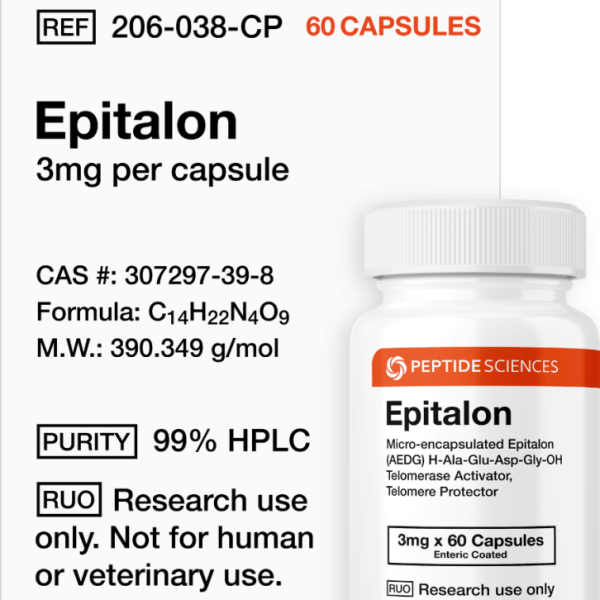
The Epitalon 3mg x 60 research capsules provide a separate research platform associated with telomere and cellular-aging investigations.
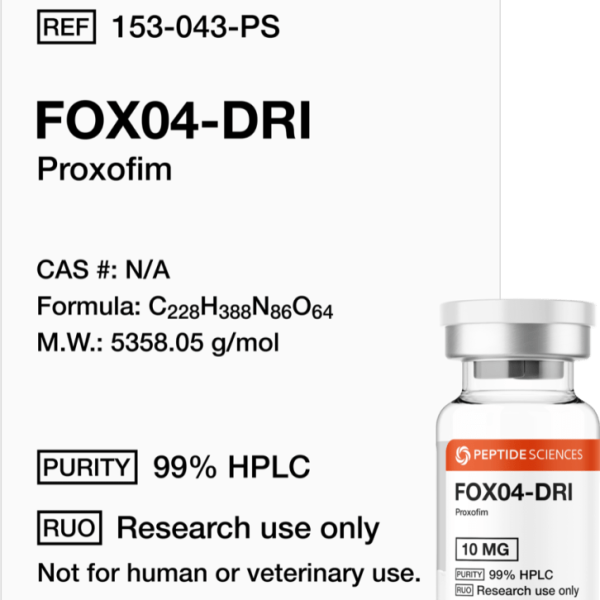
Researchers examining cellular senescence may also compare NAD-associated pathways with FOXO4-DRI 10mg Proxofim in controlled laboratory studies.
These compounds have different structures and mechanisms and should not be treated as substitutes for NAD+.
NAD+ FAQ
What is NAD+?
NAD+ is the oxidized form of nicotinamide adenine dinucleotide, an essential cellular redox cofactor and substrate for several signaling enzymes.
Is NAD+ the same as NAD plus?
Yes.
NAD plus is simply a spoken or written-out version of NAD+.
Is NAD+ a peptide?
No.
NAD+ is a dinucleotide coenzyme, not a peptide.
What is the molecular formula of NAD+?
The molecular formula is:
C21H27N7O14P2
What is the molecular weight of NAD+?
The molecular weight is approximately:
663.4 g/mol.
What is the CAS number?
The commonly referenced CAS number is:
53-84-9.
What is the difference between NAD+ and NADH?
NAD+ is the oxidized form, while NADH is the reduced form of the same redox-cofactor system.
What is the difference between NAD+, NMN and NR?
NAD+ is the final coenzyme.
NMN is an NAD biosynthetic intermediate.
NR is a precursor that can be converted into NMN and subsequently NAD+.
Why does NAD+ decline with age in research models?
Age-related NAD decline has been linked to multiple mechanisms.
One important experimental finding is increased CD38 activity, which contributes to NAD degradation and altered NMN metabolism in aging mouse models.
Can cells take up NAD+ directly?
Mammalian mitochondria can import intact NAD+ through SLC25A51.
Whole-cell handling of extracellular NAD+ is more complex and may also involve extracellular degradation and precursor uptake.
What is NAD supplement?
A NAD supplement usually refers to a consumer product containing NAD-related ingredients or precursors.
Peptide Science NAD+ is a laboratory research compound and is not sold as a dietary supplement.
Is NAD+ available as a 500mg research vial?
According to the supplied product information, a 500mg research configuration is available.
Is NAD+ also available as 1000mg?
According to the supplied product information, a 1000mg research configuration is also available.
Is NAD+ researched with sirtuins?
Yes.
Sirtuins consume NAD+ as part of their enzymatic reactions, making the NAD-sirtuin relationship an important area of metabolic research.
Is NAD+ involved with PARP enzymes?
Yes.
PARPs are major NAD-consuming enzymes involved in processes including DNA-damage-associated signaling.
Is NAD+ involved in mitochondrial function?
Yes.
NAD-associated redox reactions are essential to mitochondrial metabolism, and research has identified an intact mitochondrial NAD+ transporter in mammals.
Is NAD+ an anti-aging treatment?
No.
Age-associated NAD metabolism is an important research area, but Peptide Science NAD+ is not represented as an anti-aging therapy.
Does Peptide Science provide NAD injection instructions?
No.
No human injection, infusion, dosing or administration instructions are provided.
What is NAD therapy near me?
NAD therapy near me is a search term generally referring to medical or wellness services.
It is not applicable to this laboratory research material.
Where can researchers find NAD+ studies?
Researchers can review NAD+ metabolism, mitochondrial and cellular signaling studies on PubMed.
Is NAD+ intended for human use?
No.
Peptide Science NAD+ is supplied strictly for laboratory and in-vitro research.
It is not intended for human or veterinary consumption, injection, infusion, supplementation, anti-aging treatment, wellness therapy or clinical diagnostics.
NAD+ Research Use Disclaimer
NAD+ research material supplied by Peptide Science is designated strictly for qualified laboratory and in-vitro research purposes.
References to mitochondrial metabolism, NAD+/NADH redox chemistry, sirtuins, PARPs, CD38, cellular aging, oxidative phosphorylation and energy homeostasis describe published scientific research pathways and do not constitute therapeutic claims.
This material is not a dietary supplement, injectable treatment, IV therapy, prescription medicine or anti-aging therapy.
It is not intended for human or veterinary consumption, self-administration, injection, infusion, therapeutic administration or clinical diagnostic use.
| grams |
1000mg ,500mg |
|---|
Related products
Reviews
Clear filtersThere are no reviews yet.