
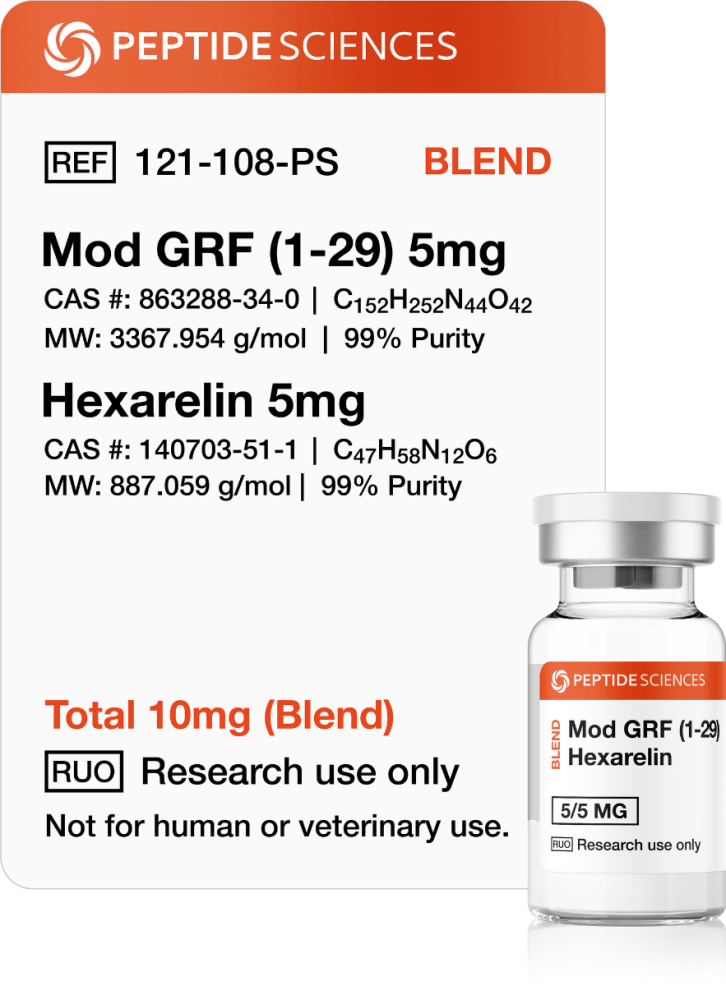
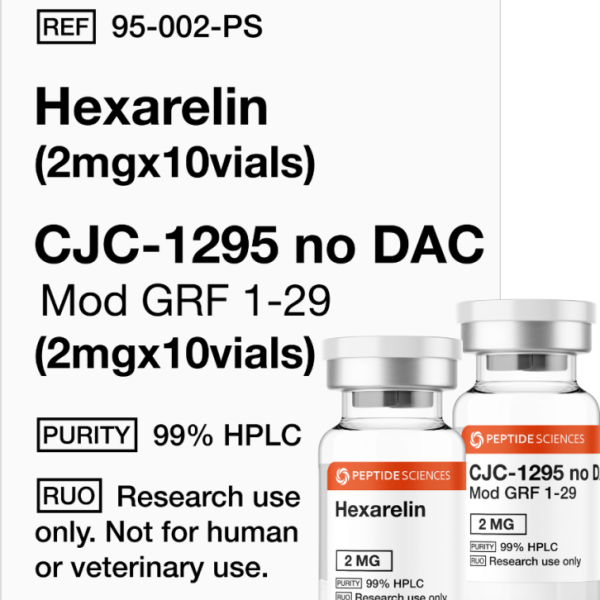
Mod GRF, Hexarelin 10mg (Blend)
$95.00
PRODUCT SHORT DESCRIPTION
The Mod GRF & Hexarelin research blend integrates two distinct growth hormone secretagogues to model dual-pathway regulation within the somatotropic axis. This 10mg formulation provides a highly potent biochemical tool for investigating synchronized growth hormone exocytosis, receptor-ligand kinetics, and signaling crosstalk.
Introduction to the Mod GRF & Hexarelin Blend
The Mod GRF & Hexarelin Blend 10mg represents an advanced, multi-component peptide matrix engineered for high-resolution studies in cutaneous endocrinology, cellular signaling, and somatotropic axis regulation. By pairing a stabilized Growth Hormone-Releasing Hormone (GHRH) analog with Hexarelin—one of the most potent synthetic agonists of the Growth Hormone Secretagogue Receptor (GHS-R1a)—this formulation serves as a highly robust, dual-pathway research model. At USA PEPTIDE SCIENCES, we supply this premier secretagogue blend as a single, uniform 10mg lyophilized cake. This integrated presentation provides research laboratories with an optimized, synergistic platform to examine synchronized pituitary degranulation and receptor crosstalk without compounding weighing variables.
Research Overview: Dual-Receptor Signaling and Growth Hormone Exocytosis
The primary investigative utility of this dual-peptide blend centers on its ability to mimic and maximize natural growth hormone (GH) pulse amplitudes by simultaneously targeting separate regulatory mechanisms in pituitary somatotrophs.
Key areas of active scientific investigation utilizing this blend include:
-
Amplified Growth Hormone Exocytosis: Modeling how the concurrent activation of GHRH receptors (by Mod GRF) and GHS-R1a/ghrelin receptors (by Hexarelin) creates a compounding intracellular signaling cascade via cyclic adenosine monophosphate (cAMP) and phospholipase C (PLC) pathways to trigger robust cellular degranulation.
-
Somatostatin Resistance Kinetics: Investigating the capacity of Hexarelin to effectively shield somatotrophs from the inhibitory influence of somatostatin (growth hormone-inhibiting hormone), thereby extending the duration of simulated secretory phases.
-
Cardioprotective and Cytoprotective Pathways: Evaluating the structural properties of Hexarelin beyond the pituitary gland, specifically tracking its interaction with CD36 and growth hormone secretagogue receptors in cardiac and vascular tissue cell lines to model tissue survival under ischemic stress.
-
Pulsatility Profile and Desensitization Mapping: Tracking the pharmacokinetic curve, metabolic clearance, and receptor down-regulation or desensitization thresholds of the combined molecules compared to isolated single-peptide controls over extended trial timelines.
Composition and Quality Validation of the Peptide Matrix
To support rigorous, repeatable analytical trials, each constituent peptide in the blend is synthesized to exact structural specifications before integration:
-
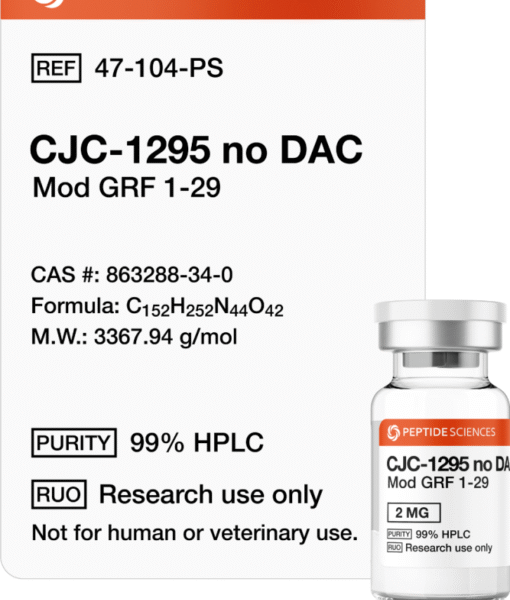
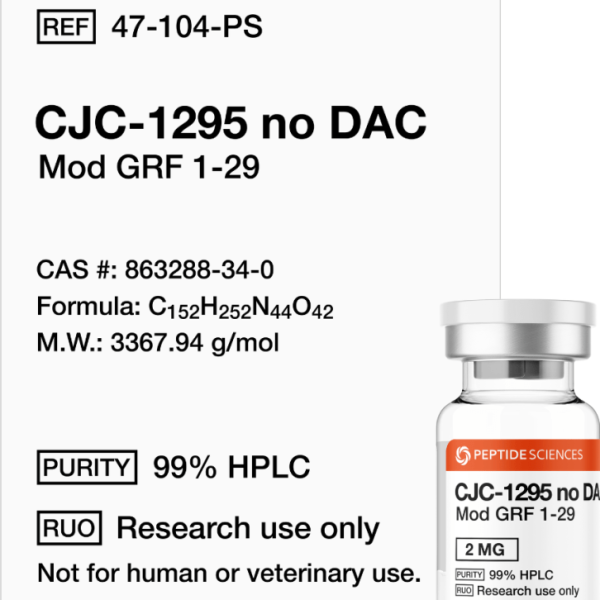
Mod GRF (Modified GRF 1-29 / CJC-1295 No DAC): A 29-amino-acid tetrasubstituted peptide analog optimized for structural stability against rapid blood plasma dipeptidyl peptidase-4 (DPP-4) cleavage.
-
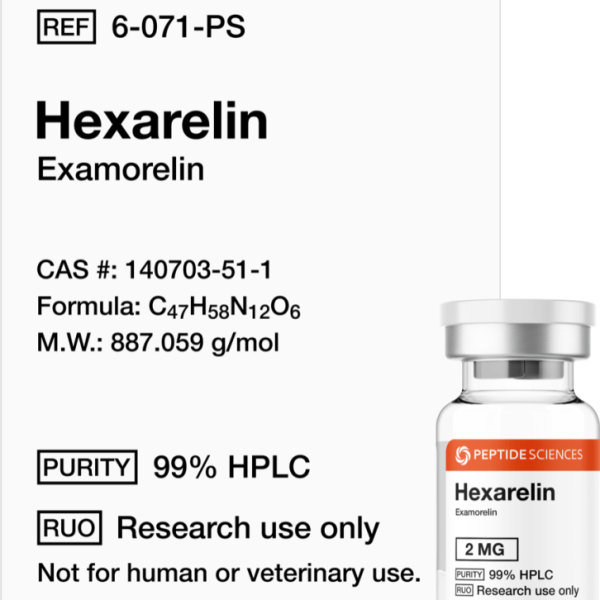
Hexarelin: A highly potent, structurally stable hexapeptide (His-D-Mrp-Ala-Trp-D-Phe-Lys-NH2) that engages the GHS-R1a receptor to drive high-amplitude signaling feedback loops and evaluate cellular energy homeostasis.
At USA PEPTIDE SCIENCES, operational accuracy and total chemical fidelity are our core manufacturing principles. Every single lot of our combined secretagogue matrix undergoes rigorous High-Performance Liquid Chromatography (HPLC) coupled with Mass Spectrometry (MS) to confirm an absolute chemical purity profile of 99% or greater for each independent sequence. A batch-specific Certificate of Analysis (COA) is issued with every order to ensure absolute experimental continuity.
Storage and Handling Requirements
To preserve the complex molecular bonds and prevent structural degradation of the Mod GRF & Hexarelin Blend, the vacuum-sealed, lyophilized powder must be stored long-term in a freezer environment at -20°C. Prior to introducing the compound into your laboratory workflow, reconstitution must be carried out using an appropriate sterile, non-pyrogenic, or bacteriostatic diluent. Once transitioned into a liquid state, the combined peptide matrix is highly sensitive to thermal breakdown and mechanical stress; reconstituted vials must be maintained under constant refrigeration at 2°C to 8°C. Researchers must dissolve the compound via a slow, gentle swirling motion, avoiding any aggressive mechanical agitation or shaking.
Research Use Disclaimer
The compounds distributed by USA PEPTIDE SCIENCES, including the Mod GRF & Hexarelin Blend, are designated strictly for laboratory research purposes only. Under no circumstances are these products approved or intended for human or veterinary consumption, direct clinical diagnostics, or therapeutic drug administration. All handling, measuring, and experimental evaluation must be conducted exclusively by qualified scientific professionals within a certified and monitored research facility.
Reviews
Clear filtersThere are no reviews yet.